
Whither Substack?
On unanswerable questions

I’ve been thinking about a couple of notes from Mills, 𝔄𝔯𝔠𝔥𝔢𝔱𝔯𝔬𝔫𝔢𝔰𝔰 𝔬𝔣 𝔒𝔟𝔩𝔞𝔩𝔦𝔞 that capture the scale of unknowns, difficult-to-predict, or just difficult aspects of helping build a platform like substack.
I say all of this as someone who regards scale with immense skepticism, even hostility. This could all be doomed; no one in the company is more sympathetic to the idea that it’s all Towers of Babel than I am! It’s our (possibly quixotic) hope that with some structural elements, we can keep Substack “small” in certain ways while scaling up the top of our funnel —as it’s called; the “incoming” or “browsing” reader population— to make it possible for more people to earn. This is one of the great challenges of what we’re doing for sure; we’ll lurch across the ideal balance point many times along the way.
Sometimes, the dream of making something that benefits from what is good about scale without being destroyed by what’s bad about it comes true; often, it doesn’t. I wouldn’t delude myself about the averages / our chances, but I also can’t believe we’re close to scale this model “deserves,” so to speak, or which our writers and creators deserve for sure! So I guess to sum, I’d say:
…
We know that this is the tension, the question, the fate of the business. We worry about it, take it seriously, read about failed efforts of the past, argue about it quite intensely internally, etc. The only thing I’d push back on with discussion around this topic is the idea that the trade-off is easy. There are literally millions of livelihoods in the balance; growth means the difference between dreams coming true or not, just as surely as bad scaling destroys culture and meaning and quality like a corrosive chemical. We could absolutely blow it, but it won’t be because “how big should Substack be” was a simple question with an obvious answer.
I feel sort of overwhelmed if I think about all the worlds of writers and readers trying to make various dreams come true here. It’s more comfortable for me to think about Substack in terms of Substack: a software product, a company, goods and services. When I think about the rest, it’s too much: it’s so hard to make it as a writer, so hard to build audiences or communities… it’s just incredibly hard.
I obviously have high hopes for Substack, but I never find user freakouts insensible or unreasonable. Like: we’ve all been on the same Internet! We’ve all seen this shit! It’s very much not insane to worry about the dynamics and nature of the place you work, create, connect, etc.
First, I appreciate the honesty in all of those. It is good to appreciate that everybody is trying to balance a number of competing priorities and that balance is never going to be perfect.
Second, I think the easiest way to think about all of those is to remember that there are two different groups that can be identified by the name “Substack” The first is the company itself, the developers, staff, hardware and software. The second is the broader substack community which includes writers and readers (at one point Hamish McKenzie suggested “Substackistan” as a term for the latter).
There are a lot of cases in which the latter is the useful category; everybody’s experience, opportunities, and audience all depend on the presence and choices of the community on the platform, not just the software.
But, that isn’t something that the developers can control. The composition and norms of the broader community is very much an emergent property. During the debates about content moderation Substack (the company) was very clear about wanted to have a light hand in terms of trying to shape or direct what happens on the platform.
That doesn’t mean that the people making Substack don’t care about or don’t have aspirations for what they hope will grow on the platform. It just means that, from their perspective, the tools they have to work with are, “a software product, a company, goods and services”
What everyone worries about is that either the incentives will diverge; that at various points the company will have interests which may not match the interests that the writers feel (the company has made clear that their primary goal, at this point, is trying to maximize total subscription revenue across the site, which creates a partial alignment between company and writers — but only partial).
The other element that’s equally true in this situation, but that we have less established language for, is that everyone who is interested in the quality of writing and conversation on the site has very limited information about how it will change, and what structural factors will end up being important. It’s easy to be anxious because we all care about the outcomes but have limited perspective on what is happening.
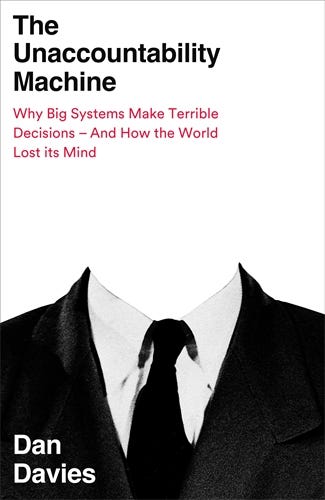
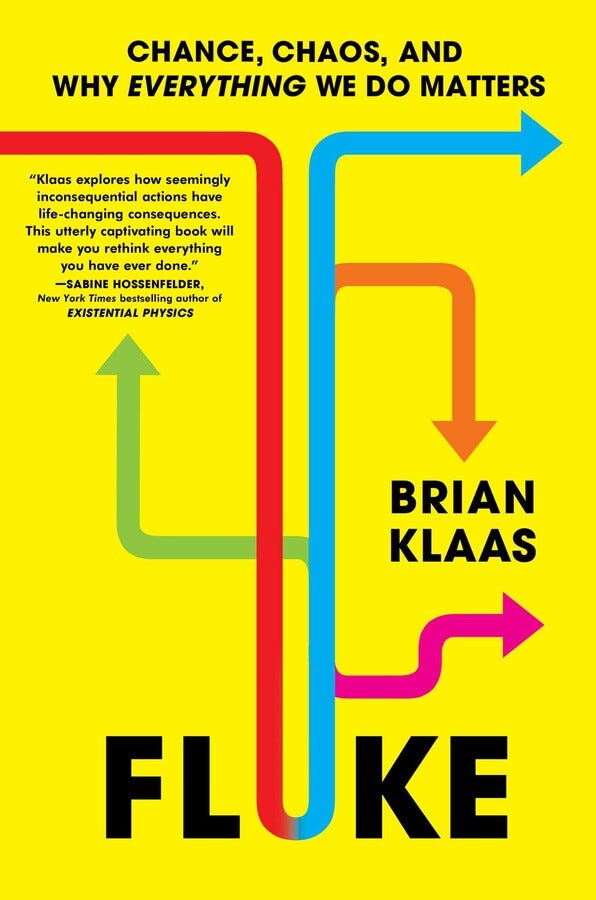
This thought is very much influenced by just reading The Unaccountability Machine by Dan Davies , and Fluke by Brian Klaas, both interesting books, which overlap in their attention to the necessity of making decisions based on partial information (Dan Davies is interested in the strategies that can help that work better Brian Klass in philosophical acceptance of the situation).
Also, I’d offer my appreciation for SmallStack which looks like a great project which may provide a model for people to work together to build resources, collaborate, and maybe, collect stories and information about what is and isn’t happening.
Last night we all probably got the memo that James Patterson is coming to Substack in September. Fortunately, he and I don't have the same readers, so it's not competition. But it made me think that Substack is the Spotify of writing. The big stars get the revenue from many millions of streams; the vast majority of musical artists can't make a living wage at all or anything remotely close to anything more than gas money. Here, there's very little developmental opportunity for writers who once had middle class jobs at newspapers and magazines to develop and maintain a middle class existence on Substack. Every excellent writer I know is fretting (many out loud) on their sites about income strategies that don't really exist, as the vast pool of writers and the readers now in this developing "social network" can only select a small handful to pay for. After three years, I'm still adding 50 new free subscribers a month. Paying subscribers remain at around 5 per cent, typical, I was told, for direct mail products.
One of the things I despise the MOST about the younger generation of programmers is their all-purpose dismissal of anything they don't like:
"That doesn't scale!"
I have my own all-purpose dismissal:
"If it's the Conventional Wisdom, it's always wrong."
You can always profitably doubt anything that everyone says.